

Call-Off vs Regular Ordering: Which Is Best for Your School or Trust?
Schools order paper constantly. It fuels classrooms, offices, parent communications, assessments and staff resources. The product rarely changes, but the way it is ordered can have a major impact on cost, storage, staff workload and supply reliability.
Most schools either place regular orders throughout the year or use a call-off ordering system. Both provide the same quality products, yet the processes and outcomes differ significantly.
Understanding the difference between regular and call-off ordering helps schools and Multi-Academy Trusts make smarter purchasing decisions that save money, reduce admin and ensure paper is always available when needed.
What Is Regular Ordering?
Regular ordering is the traditional approach most schools are familiar with. It involves placing a new purchase order each time more stock is required, often monthly or termly.
Each order needs internal approval. Depending on your systems, that may involve budget holders, finance teams and purchase ledger checks. This process repeats every time a delivery is needed.
Because each order is treated individually, pricing can change throughout the year. Paper costs are influenced by pulp prices, mill production and demand across the sector. When orders are placed reactively, schools are more exposed to price increases.
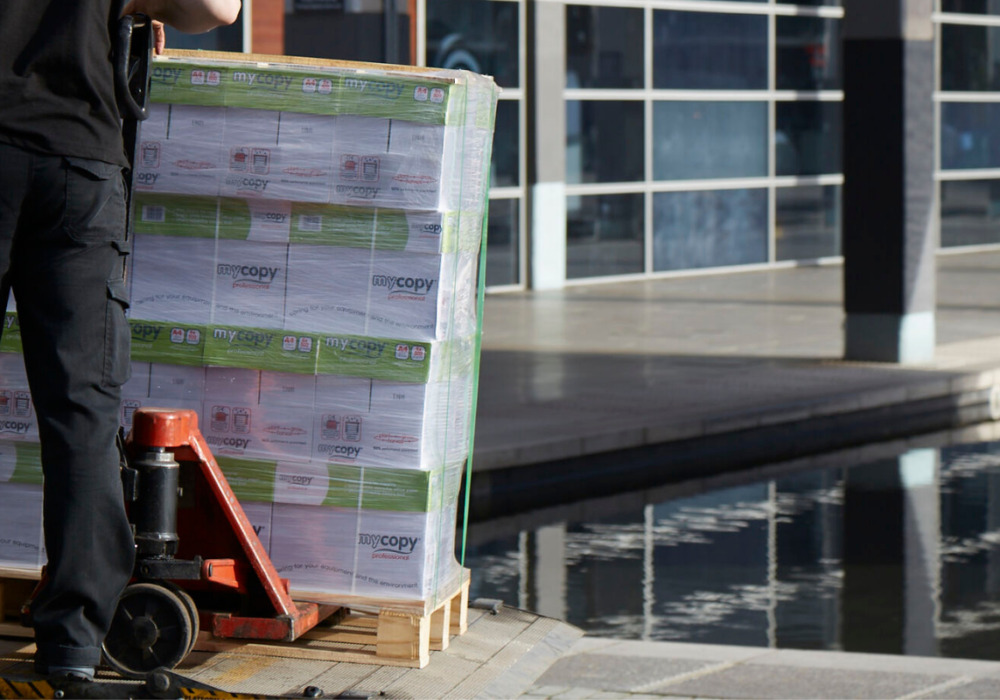
Storage is another challenge. When an order arrives, the full quantity is delivered to site. Schools that try to buy in bulk to secure better prices often find themselves short of space. Boxes end up in corridors, offices or cupboards that are not designed to hold large volumes of consumables.
Regular ordering still has its place. It can work well for smaller schools with modest usage or those that place stationery and paper orders together on an ad-hoc basis. If volume is low and flexibility is the priority, the traditional model remains a practical option.
What Is Call-Off Ordering?
Call-off ordering takes a more planned and strategic approach. Instead of ordering reactively, schools estimate their annual paper usage and commit to that volume in advance. A single purchase order then covers the full year without requiring the entire quantity to be delivered at once.
Springfield does not physically store a full year’s supply for each individual customer. Instead, we plan and reserve your volume within our wider stock profile and fulfil it in the quantities you request throughout the year. This gives you guaranteed availability without the strain on your storage space.
You simply request your paper as needed, whether monthly, termly or at peak periods. The administrative work is completed once at the start, so there are no repeated approval loops.
One of the major benefits is fixed, competitive pricing. Because Springfield can place consolidated orders with the mill, we secure better rates which are passed back to your school or trust. This keeps your price per box stable for the full academic year and protects you from mid-year increases.
Call-off ordering helps avoid stock shortages too. Your allocation is planned in advance, so even during busy periods, you know your supply is ready.
This approach reduces admin significantly. Finance teams deal with fewer invoices, staff spend less time raising POs and site teams no longer need to store large deliveries. It is ideal for secondary schools, colleges and MATs with predictable annual usage.
Key Differences at a Glance
Although both methods provide the same paper, the impact on cost, time and operational efficiency is very different.
Purchase Process
Regular ordering requires a new PO each time. Call-off uses one PO for the entire year.
Pricing Regular ordering is vulnerable to price fluctuations.
Call-off pricing is fixed and often lower due to planned mill purchases.
Approvals and Admin
Regular orders repeat the approval cycle. Call-off cuts this down to a single approval.
Delivery and Storage
Regular orders arrive in full and must be stored on site. Call-off allows smaller, scheduled deliveries while Springfield manages your allocation within planned stock.
Supply Reliability
Regular orders depend on current availability. Call-off provides planned allocation and consistent supply throughout the year.
Best Fit
Regular ordering suits low-volume or unpredictable usage. Call-off suits schools and trusts with steady demand and a need for more predictable costs.
Choosing the Right Model for Your School or Trust
Both approaches have value and the right choice depends on how your school operates.
Call-off ordering is a strong fit if you:
• Have predictable year-round usage
• Want to reduce administrative workload
• Prefer stable and consistent pricing
• Do not have space for large on-site deliveries
• Need guaranteed supply at key points in the academic year
If your usage is low or highly variable, or if you combine paper with other stationery orders, regular ordering may still be suitable. For schools and trusts seeking a smoother, more cost-effective and more predictable approach, call-off ordering offers clear advantages.
Make Your Ordering Work Harder
Paper ordering should not be a monthly interruption. It should support your staff, your budget and your operational needs without slowing anything down.
At Springfield Papers, we help schools and trusts assess the best model based on usage, delivery capacity and budget. Whether you are supplying one site or centralising for several, we will help you design a plan that works and ensure your paper is available when you need it.
Talk to Us About Call-Off Ordering
If you would like to compare call-off ordering to your current approach, contact our team for a quick review. We will help you estimate your annual usage, plan your deliveries and give you clarity on pricing and admin requirements.
Get in touch to see how call-off ordering could work for your school or trust.